January 4, 2025
Critical Asset Information Is Still Being Stored in the Wrong Places
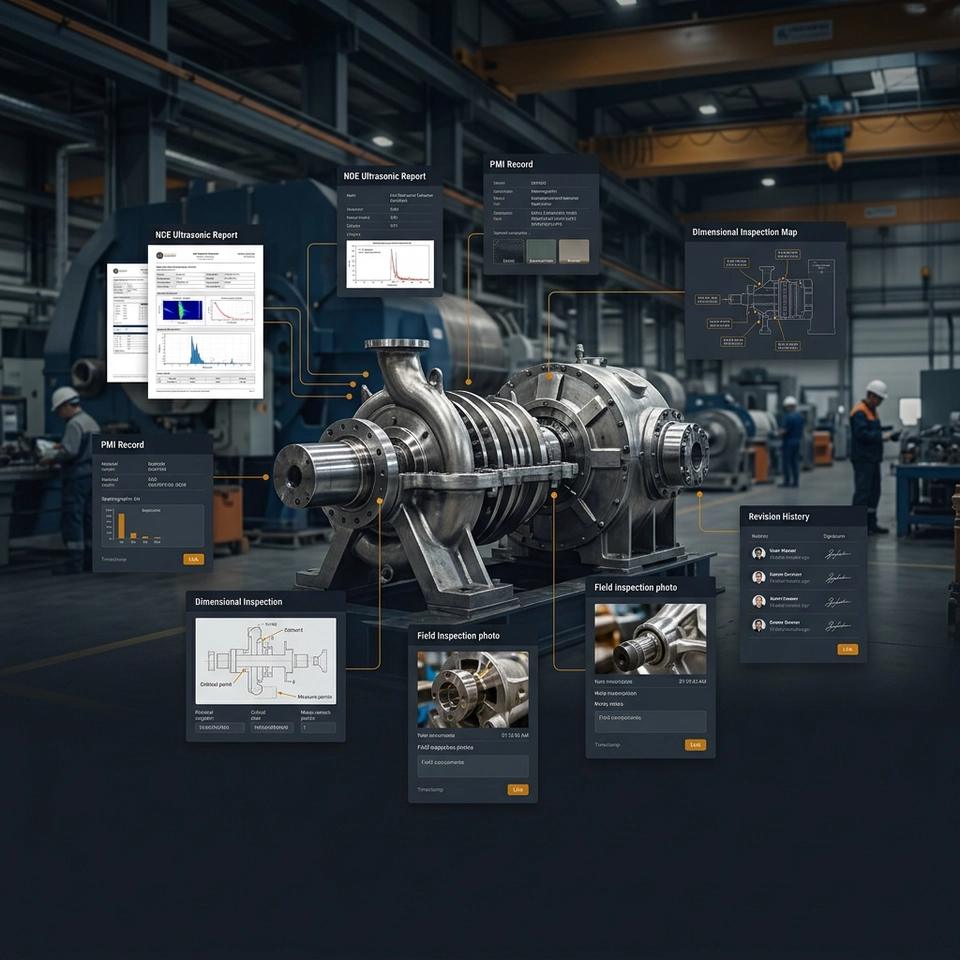
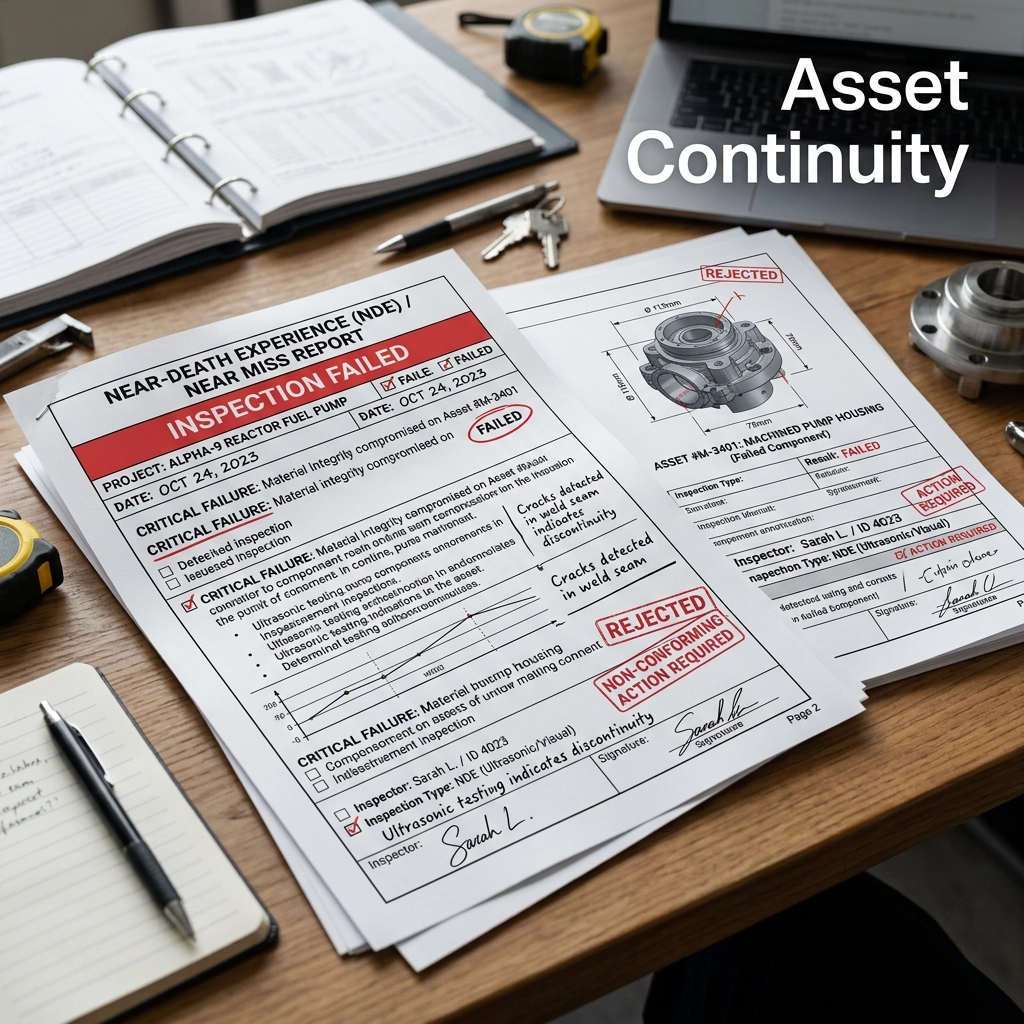
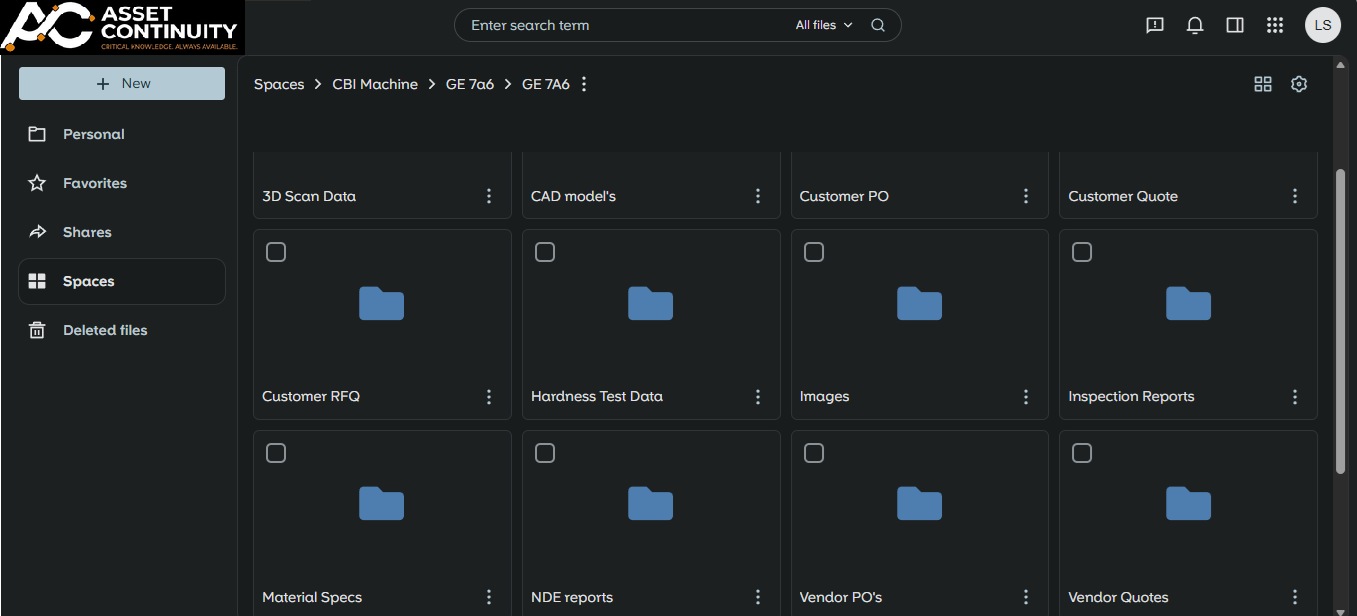
In many industrial organizations, the most valuable information behind critical assets is still being stored in places never designed to support continuity, traceability, or long-term access. The issue is not simply where the files sit. The issue is what happens to the business when those files are needed later and cannot be found, verified, understood, or trusted quickly enough.That is where the real risk begins.For years, industrial teams have relied on a patchwork of storage habits that feel functional in the moment but fail under pressure over time. Drawings are saved to local desktops. Reports live inside email chains. Scan files are downloaded once and placed into disconnected folders. Inspection photos remain on personal devices. Revision notes are tracked in spreadsheets. Field documentation is split between notebooks, PDFs, shared drives, and memory. Vendor records live in procurement systems, while technical context sits somewhere else entirely. On the surface, it appears that the information exists. In practice, it is fragmented, scattered, and increasingly difficult to use.That distinction matters more than most organizations realize.The industrial world does not suffer from a lack of data. It suffers from a lack of structure around that data. High-value information is constantly being created through inspection, engineering, metrology, maintenance, fabrication, outage work, reverse engineering, field service, and procurement activity. Yet even when the work is technically sound, the records behind it are often stored in systems and locations that were never intended to preserve industrial knowledge over the long term.An inbox was not designed to be a system of record. A shared drive was not designed to preserve asset context. A desktop folder was not designed for enterprise continuity. A file-transfer link was not designed to support future traceability. Personal phones, local machines, loosely named folders, and disconnected cloud repositories may serve as temporary holding places, but they do not provide a durable operating model for critical asset knowledge.And over time, the cost of that reality compounds.At first, the damage is easy to miss. A team spends an extra thirty minutes searching for a drawing. A report takes longer than expected to locate. Someone asks a former employee where the final file was saved. A field team calls engineering to verify which revision is current. These moments feel small in isolation. They rarely trigger a major internal alarm. But together, they reveal something much more serious: the organization does not truly control the information it depends on.That lack of control becomes expensive quickly.When critical records are stored across disconnected locations, teams spend time searching instead of executing. Engineering delays decisions because supporting documentation cannot be verified. Maintenance works from incomplete history. Inspection teams repeat work because prior records cannot be retrieved with confidence. Procurement chases vendor information that should already be tied to the asset. Service providers resend files that should have remained accessible from the original engagement. Operations loses time waiting for clarity that should have been available immediately.These are not minor administrative inefficiencies. They are operational losses.They show up as rework, delay, miscommunication, slow handoffs, duplicate effort, uncertain decisions, and missed opportunities to act with confidence. They affect outage execution, planning cycles, maintenance strategy, customer responsiveness, and the overall reliability of technical decisions. And because the losses are distributed across departments and events, the total impact is often far greater than leadership sees at first glance.That is part of what makes the problem so persistent. The cost is real, but it rarely arrives as one obvious line item.Instead, it appears in fragments. A delayed scope review. A repeated inspection. A missed deadline. A design team forced to recreate context. A machine shop waiting on the correct revision. A reliability engineer unable to compare current condition against prior data. A plant manager asking for history that technically exists somewhere, but not in a form that is accessible, complete, and usable under time pressure.This is how expensive knowledge becomes operationally weak.The information may still exist, but if the organization cannot retrieve it quickly, trust it fully, and connect it clearly to the right asset, event, and decision, then much of its value has already been lost.This is especially dangerous in industrial settings because the records behind the work are not just administrative artifacts. They are decision tools. A drawing is not just a document. It informs repair, fabrication, and installation. A scan file is not just a digital output. It supports dimensional understanding, reverse engineering, and future comparison. An NDE report is not just a PDF. It can influence scope, risk, safety, and replacement decisions. A revision log is not just history. It tells the organization what changed, why it changed, and what should be trusted now.When those records are disconnected from the asset and from each other, the business loses more than convenience. It loses continuity.And when continuity is lost, the downstream consequences become severe.Teams begin relying on memory instead of history. They make assumptions instead of working from evidence. They recreate work that was already paid for. They delay action while trying to establish what should have been clear from the start. They carry uncertainty into planning, maintenance, outage execution, and client communication. In some cases, they move forward without the full picture because the work has to continue, even though the supporting information is incomplete or difficult to verify.That is not a documentation issue. That is a control issue.It means the organization has allowed critical knowledge to live in places that cannot support the level of continuity the operation actually requires.This challenge becomes even more acute over time. Employees retire. Contractors roll off. Service providers change. Systems evolve. Folder structures drift. Naming conventions collapse. Links expire. Devices are replaced. Access permissions change. Context disappears. What was once easy for one person to navigate becomes nearly impossible for the next person to interpret. The file may still be there, but the logic behind it is gone.That is why disconnected storage habits create a hidden but growing liability.They tie knowledge to individuals, temporary workflows, and fragmented systems instead of retaining it in a structured environment built for long-term use. As that fragmentation increases, organizations become less resilient. Every turnover event widens the gap. Every new project adds more complexity. Every missing piece of context increases the chance that future decisions will be made with incomplete understanding.This is precisely the problem Asset Continuity was built to solve.Asset Continuity is a purpose-built system for preserving critical industrial knowledge in a way generic storage tools never were. It does not simply hold files. It creates structure around the information that matters most. Drawings, scan data, reports, revision history, field documentation, inspection records, photos, certs, vendor materials, and supporting context are all retained in one organized environment tied directly to the asset, component, or project they belong to.That shift is significant.It means the organization no longer has to depend on scattered habits, individual memory, or disconnected repositories to hold together the history of an asset. It means teams know where to go when they need the latest drawing, the prior scan set, the relevant NDE findings, the supporting photos, the material certification, or the field notes that explain why a decision was made. It means the information remains accessible and usable not just at the time of delivery, but months and years later when the next maintenance event, outage, design review, or failure investigation takes place.Asset Continuity replaces fragmentation with structure.It replaces uncertainty with traceability.It replaces scattered storage with a lasting system of record.That matters because industrial continuity is not created by having more files. It is created by preserving the relationship between those files and the asset history they support. When information is connected properly, the business can move faster, respond better, and make stronger decisions with less guesswork. When it is disconnected, every critical event becomes harder than it needs to be.Asset Continuity ensures the value of technical work does not end at delivery. It preserves the usability of that work over time. It keeps records from being buried, orphaned, or forgotten. It gives teams a reliable environment where continuity can survive personnel changes, contractor transitions, outage cycles, and the slow erosion that comes from unmanaged storage habits.Most importantly, it protects the business from a problem many organizations still underestimate: the belief that storing information somewhere is the same as preserving it properly.It is not.Industrial knowledge requires more than storage. It requires structure, context, access, and continuity. Without those things, the records behind critical assets become progressively harder to trust and increasingly expensive to recover.That is why Asset Continuity is not simply a better place to keep files. It is the purpose-built alternative to a broken operating model.There are countless ways to save a document. There are very few serious solutions built to preserve the full body of industrial knowledge behind critical assets.Asset Continuity was created to be that solution.It gives industrial organizations one structured, reliable place to protect the records, revisions, reports, scans, and supporting context that keep assets moving and decisions grounded in evidence. It reduces rework, improves handoff, strengthens traceability, and ensures that critical knowledge remains accessible long after the immediate work is complete.If your organization is still relying on inboxes, local drives, shared folders, transfer links, personal devices, and disconnected systems to manage high-value asset information, the risk is already active. The data may exist, but the continuity is exposed.Asset Continuity closes that gap.It gives your organization the control, structure, and long-term access that critical industrial information has always required but rarely had.Because in environments where continuity, traceability, and access matter, storing valuable knowledge in the wrong places is not just inefficient.It is expensive. It is avoidable. And with the right system in place, it is no longer necessary.